
Technology Breakthroughs of 2025


Saving one life at a time: Gene-editing in clinical use
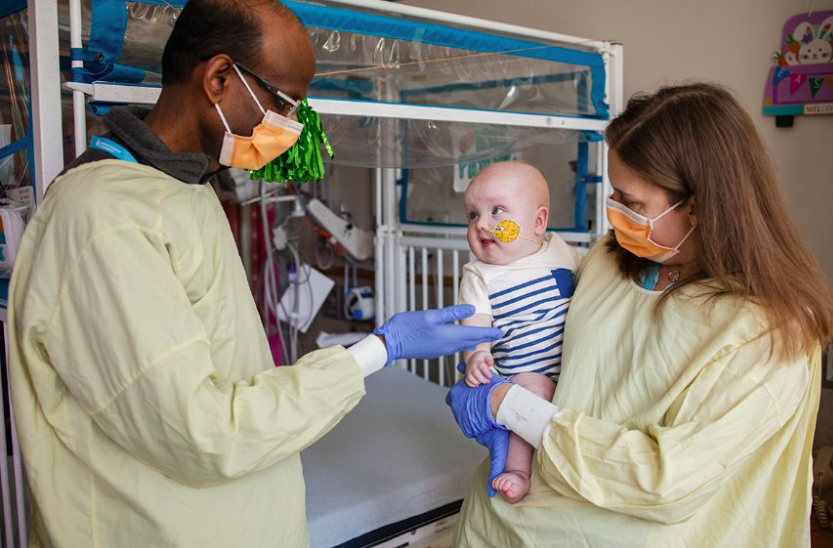
Baby KJ was born in August 2024 with an ultra-rare genetic condition – carbamoyl-phosphate synthetase (CPS1) deficiency. The CPS1 enzyme, in the liver, converts ammonia (from broken down proteins) to carbamoyl phosphate. Mutations in the CPS1 gene cause carbamoyl phosphate synthetase I deficiency. CPS1 deficiency affects 1 in 1,300,000 persons. Defects in CPS1 can cause high levels of ammonia to build up which is damaging to the nervous system. The condition can be treated with a liver transplant, but about half of all babies with CPS1 deficiency die in early infancy. KJ became the world’s first individual to receive a therapy which would work only for him. A team of researchers led by the scientists from Children’s Hospital of Philadelphia and Perelman School of Medicine at the University of Pennsylvania developed a base-editing therapy (K-abe), delivered in vivo to hepatocytes through lipid nanoparticles. This hyper-personalized editing therapy was made within 6 months (Figure – 1(a)) of genetic diagnosis – the quickest ever! On 25 February 2025, KJ received the first of three infusions. He was discharged in June 2025. His tolerance for protein in his diet has increased, but he still needs medication and regular monitoring to ensure that his ammonia levels stay in check (Figure – 1(b)).
Tattooing a Tardigrade
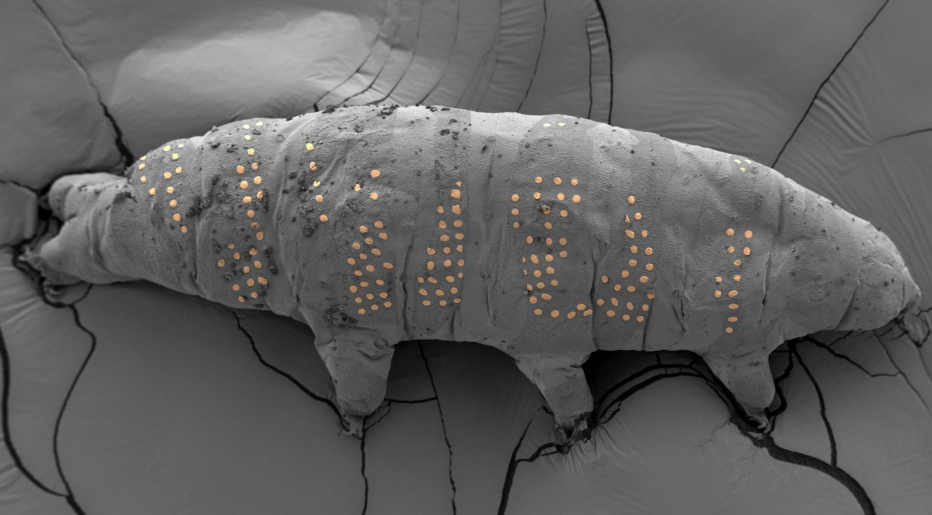
Tardigrades or water bears are microscopic animals known for their peculiar shape and extreme resilience. They are usually ~0.5 mm long when fully grown. Researchers at Westlake University, China used ice lithography (IL) for patterning on the tardigrade. An electron beam irradiated solid anisole deposited on tardigrade’s surface according to a predetermined pattern. The tardigrade was heated up to room temperature and the nonirradiated anisole sublimes, while the irradiated forms the pattern on its surface. The electron beam transforms the solid anisole into a compound that sticks to the tardigrade’s skin, leaving the design visible when the rest of the ice evaporates (Figure – 2). The scientists who developed this ‘tattooing’ method believe that the method’s extremely high precision means it could have applications in biomedical engineering. They are now working on tattooing even smaller organisms, including bacteria, in the same way.
Experiments in Space by ISRO
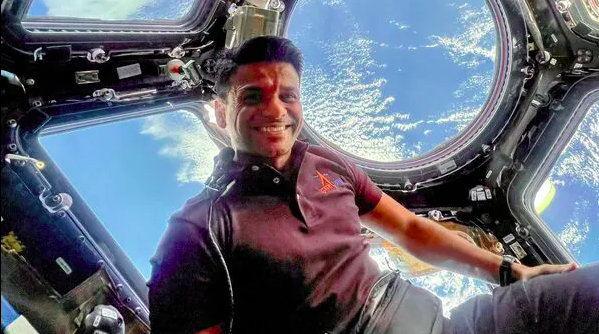
In July 2025 Group Captain Shubhanshu Shukla (Gaganyatri) became the first ISRO astronaut to visit the International Space Station (ISS) while participating in Axiom Mission 4, a privately organised spaceflight. The field of microgravity research with potential applications in areas such as human health, physical/life sciences, material research, novel pharmaceutical development and biotechnology offers significant opportunities to the national scientific community. ISRO shortlisted seven microgravity research experiments proposed by Indian Principal Investigators (PIs) from various national R&D laboratories/ academic institutions for implementation on International Space Station (ISS) during the Axiom-4 mission with ISRO’s Gaganyatri. The tardigrade experiment focused on their survival, revival, and reproductive behaviour in space. This study will provide valuable insights into the underlying biological mechanisms leading to resilience of extremophile organisms in microgravity environment and has potential applications on Earth especially in the area of therapeutics. The Myogenesis study, explores the effects of microgravity on human muscle regeneration, is progressing with planned interventions and recording of observations. In parallel, other Indian experiments for studying selected strains of microalgae and cyanobacteria under space conditions are ongoing, contributing to research on regenerative life support systems and crew nutrition. As part of the Electronic Displays human research study, the Gaganyatri carried out daily software-based cognitive and interface assessments. The study aims to optimize crew interaction with digital systems in the unique environment of space.
AI-powered research made leaps in 2025, and it is here to stay. AI tools that integrate several large language models (LLMs) to carry out complex, multi-step processes are likely to be used more widely, some with little human oversight. Next year will also bring techniques that move beyond LLMs, which are expensive to train. Newer approaches focus on designing small-scale AI models that learn from a limited pool of data and can specialize in solving specific reasoning puzzles. These systems do not generate text, but process mathematical representations of information. Following the success of Baby KJ’s treatment, next year could see the launch of two clinical trials to develop personalized gene therapies for children with rare genetic disorders. A UK clinical trial of a single blood test that detects around 50 types of cancer before symptoms begin is expected to report results in 2026. The test screens for ctDNA that cancer cells release into the blood, and can home in on the tissue type or organ that the signal comes from.
Science is accelerating faster than ever. As we close the remarkable chapter of 2025, 2026 promises transformative shifts in the global technology landscape—driven by breakthrough innovations in AI, quantum computing, biotechnology, and beyond.
Kashish Taneja received his Master’s degree in Chemistry from the Jawaharlal Nehru Centre for Advanced Scientific Research (JNCASR) in May 2023. He subsequently joined Blockchain For Impact (BFI) as Associate Deputy Manager in the Biomedical Research and Innovation vertical, where he played a key role in implementing funding programs – most notably supporting the BFI-BIOME Network Program, a strategic initiative advancing early-stage translational biomedical research and innovation in India. Currently at MiMD, he focuses on developing a liquid biopsy assay for targeted therapy selection in advanced and metastatic solid tumors. Through his research and contributions, Kashish is dedicated to making biomedical technologies more accessible and affordable for patients in need.